


For Kidney Support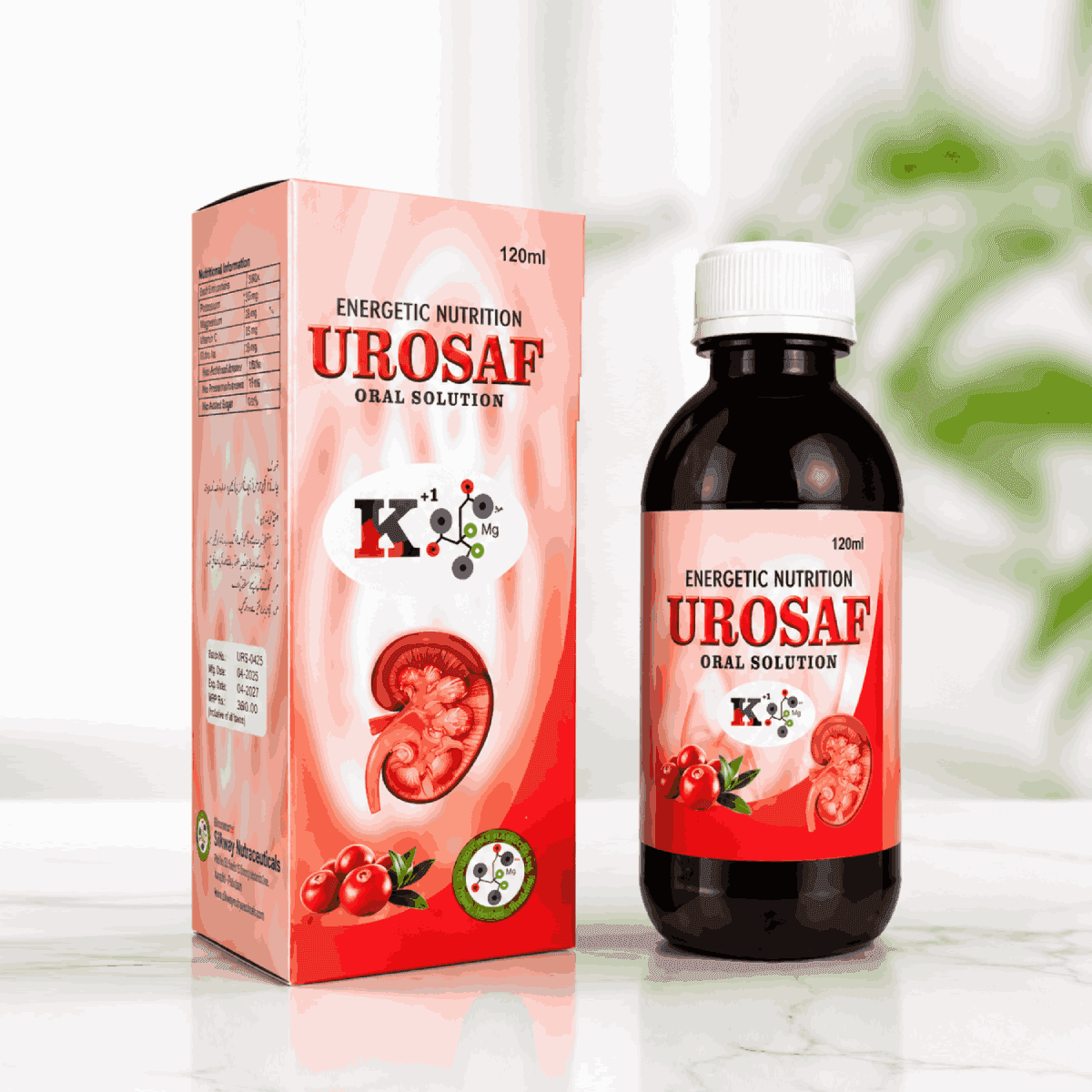
UROSAF
Rs 250
- Prevention of reoccurrence of urinary stones.
- Renal tubular acidosis (RTA) with calcium stone.
- Hypocitraturic calcium oxalate nephrolithiasis of any etiology.
- Uric acid lithiasis with or without calcium stones.
- Thiazide induced hypokalemia and hypomagnesemia in hypercalciuric nephrolithiasis.
- Burning sensation.
- Dermatologist Inspired
- Cash on Delivery
- Nationwide Delivery
1
Know your formula
Product Description
Everything about UROSAF — how it works, what it delivers, and the details that matter before you buy.
For Prevention of urinary stones, Burning sensation.
The lifetime prevalence of urolithiasis ( kidney stones) is estimated to be 1% to 15%. Varying according to age, gender, race, and geographic location. The calcium stones are the most common type of the stones and calcium oxalate stones accounts for 60% of all stone types.
After the initial management of first stone episode, there is a risk of reoccurrence stone formation due to underlying metabolic abnormalities. Reoccurrence rate is about 10% in one year, 35% in five years and 50% in ten years.
Common Metabolic Abnormalities:
The common metabolic abnormalities associated with the kidney stone formation are Hypocitraturia, Hyperoxaluria, Hypercalciuria etc.
Composition:
Each 5ml contains:
Potassium citrate 1100 mg
Magnesium citrate 375 mg
Dosage form:
Oral solution.
Mechanism Of Action:
Potassium citrate and Magnesium citrate solution when given orally, the metabolism of absorbed citrate produces an alkaline load.
In addition to raising urinary PH and citrate, this also increases urinary potassium and magnesium. In some patients potassium citrate causes a transient reduction in urinary calcium.
These changes produce urine that is less conductive to the crystallization of stone-forming salts (calcium oxalate, calcium phosphate and uric acid). Increased citrate in the urine, by the complexing with calcium, decreases calcium ion activity and thus the saturation of calcium oxalate. Citrate and magnesium also inhibits the spontaneous nucleation of calcium oxalate and calcium phosphate.
The increase in urinary PH also decreases calcium ion activity by increasing calcium complexation to dissociated anions. The rise in urinary PH also increases the ionization of uric acid to more soluble urate ion.
Potassium citrate therapy does not only alter the urinary PH but also increases the ionization of uric acid to more soluble urate ion.
Potassium citrate therapy does not alter the urinary saturation of calcium phosphate, since the effect of increased citrate complexation of calcium is opposed by the rise in PH dependent dissociation of phosphate.
Calcium phosphate stones are more stable in alkaline urine.
Indications:
UROSAf is indicated for :
Prevention of reoccurrence of urinary stones.
Renal tubular acidosis (RTA) with calcium stone.
Hypocitraturic calcium oxalate nephrolithiasis of any etiology.
Uric acid lithiasis with or without calcium stones.
Thiazide induced hypokalemia and hypomagnesemia in hypercalciuric nephrolithiasis.
Burning sensation.
Dosage And Administration:
One teaspoon (10ml) of UROSAF diluted with one glass of water.
Twice daily or as directed by the doctor.
Mechanism Of Action of UROSAF
Potassium citrate and Magnesium citrate solution when given orally, the metabolism of absorbed citrate produces an alkaline load. In addition to raising urinary PH and citrate, this also increases urinary potassium and magnesium. In some patients potassium citrate causes a transient reduction in urinary calcium. These changes produce urine that is less conductive to the crystallization of stone-forming salts (calcium oxalate, calcium phosphate and uric acid). Increased citrate in the urine, by the complexing with calcium, decreases calcium ion activity and thus the saturation of calcium oxalate. Citrate and magnesium also inhibits the spontaneous nucleation of calcium oxalate and calcium phosphate. The increase in urinary PH also decreases calcium ion activity by increasing calcium complexation to dissociated anions. The rise in urinary PH also increases the ionization of uric acid to more soluble urate ion. Potassium citrate therapy does not only alter the urinary PH but also increases the ionization of uric acid to more soluble urate ion. Potassium citrate therapy does not alter the urinary saturation of calcium phosphate, since the effect of increased citrate complexation of calcium is opposed by the rise in PH dependent dissociation of phosphate. Calcium phosphate stones are more stable in alkaline urine.
UROSAF
For Kidney Support
Backed By Science
Key ingredients chosen to support daily internal wellness.

Targeted botanicals
Chosen to support daily internal wellness

Consistent serving
Easy to take as part of a routine

No unnecessary extras
A focused, practical formula
Treatment Areas
Kidney
Urine burning
Kidney stones
Infections
How to take
- 01
Water
Take 1 glass full of water.
- 02
Syrup
Mix 1-2 tablespoon of syrup into the water.
- 03
Frequency
Take 2-3 times a day or as directed by physician.
Optimization
Maximize Your Results
Herbal and nutritional urinary complexes build protection over time. Maintain daily intake throughout your targeted cycle rather than taking it only when discomfort arises.

Pro Tip: Take it with a large glass of water, and maintain high fluid intake throughout the day.
Real results
Before and after from real customers using this treatment — shown in one comparison photo.
What Our Customers Say
Tell us more about your journey
—
0 verified reviews
No reviews yet. Be the first to share your experience.
Complete Your Routine
Explore more clinical solutions for targeted skin concerns.


Frequently Asked Questions
What is Urosaf and how does it support urinary tract health?
Urosaf is a targeted nutraceutical formulation designed to promote urinary tract health, reduce burning sensations during urination, and protect against recurrent urinary tract infections (UTIs). It works by inhibiting harmful bacteria (such as E. coli) from adhering to the bladder lining, allowing them to be naturally flushed out through normal urination.How does Urosaf help in preventing the formation of kidney stones?
Urosaf supports kidney stone prevention by helping maintain an optimal urinary pH and inhibiting the crystallization of excess minerals in the urinary tract. By promoting healthy fluid excretion and preventing calcium and oxalate deposits from binding together, it minimizes the risk of stone formation and aids in flushing out micro-crystals before they develop into painful stones.Can Urosaf be used to treat an active, acute Urinary Tract Infection (UTI)?
No. Urosaf is a supportive nutraceutical supplement meant for urinary health maintenance and reducing the recurrence of infections. While it helps flush bacteria and relieve mild burning sensations, an active bacterial UTI may require a doctor-prescribed course of antibiotics. Urosaf can, however, be taken alongside antibiotics to support recovery.How and when should I take Urosaf for best results?
One teaspoon (10ml) of UROSAF diluted with one glass of water. Twice daily or as directed by the doctor.Are there any side effects, and is Urosaf safe for long-term daily use?
Urosaf is generally very well tolerated with a high safety profile. Because it relies on natural bacterial-binding and urine-alkalizing mechanisms rather than harsh chemicals, it is safe for daily, continuous use to maintain long-term urinary wellness.How quickly can I expect relief from urinary discomfort?
Relief from mild urinary irritation and burning sensations often begins within 24 to 48 hours as the ingredients help cleanse the bladder lining and balance urinary acidity. For long-term protection against recurring UTIs and stone formation, continuous daily use for 4 to 8 weeks is recommended.